
It’s Not Just Politics… Other Expenses Keeping Canadians Away From Spending on Housing
Canada’s mortgage rates are rising fast — how do you secure the lowest rate possible?

Homebuyers and homeowners rushed to join the party when the pandemic produced some of the cheapest mortgages in Canadian history.
Extremely low interest rates, fewer home listings and high demand fuelled sales. As a result, over half a million homes homes changed hands in 2020, according to the Canadian Real Estate Association.
But now, 5 year fixed mortgage rates are beginning to climb again for the first time since before the pandemic hit. And, Canadians looking to capitalize on historically low rates may want to act now, before mortgage rates rise further.
Mortgage rates started tumbling last year after the Bank of Canada slashed its key policy rate three times in March 2020 to a record-low 0.25%, to help the economy weather the pandemic.
As home lending rates tanked, borrowers with strong credit found they could refinance a 5 year fixed-rate home loan at rates below 1.5% — the cheapest Canadians had ever seen.

Now, major financial institutions including TD Bank and National Bank of Canada say they have raised rates on at least some mortgage products as growing optimism over the economy has sent the yield on the Canada 5 year bond soaring.
Would-be borrowers who don’t act promptly run the risk of losing out on mortgage rates that are still very low by historical standards.
“The fixed rates have gone up about a quarter-point and people may be nervous about that, but you still have rates at or just under the 2 per cent range,” says Jason Zuckerman, a Montreal-based real estate mortgage broker.
For a first-time homebuyer, securing one of today’s low rates could mean saving thousands of dollars over a fixed five-year term. And, homeowners who refinance a higher-rate mortgage can save on interest over the coming years, and reduce their monthly payment right now.
Before you start the mortgage application process, you’ll want to make sure you have minimal debt, good credit and proof of adequate work income. Lenders also will want to see that you can produce a down payment.
“Banks want to make sure that you don’t have too much debt,” says Zuckerman. “They also want to make sure that you’re managing your debt and you know how to use credit responsibly.”

Your credit score will need to be at least 660. Anyone with a score below 560 will struggle to get a decent interest rate and may not get a loan at all. And anything above 760 is excellent.
You can check your credit score online for free online. If your score is low, you’ll want to improve it by reducing your credit balances and taking other damage control measures before you try to lock in a mortgage rate.
As for your income, it’s important to show banks you have steady employment.
“If you’re employed, they generally want to see full-time, salaried individuals,” Zuckerman says. “If you’re contractually or self-employed, lenders typically use the last two years of your income.”
You can usually qualify for a mortgage worth five times your gross (pre-tax) income if you can produce a down payment and don’t have large debt, he adds.
For many applicants, their first step in looking for a mortgage is their own bank.
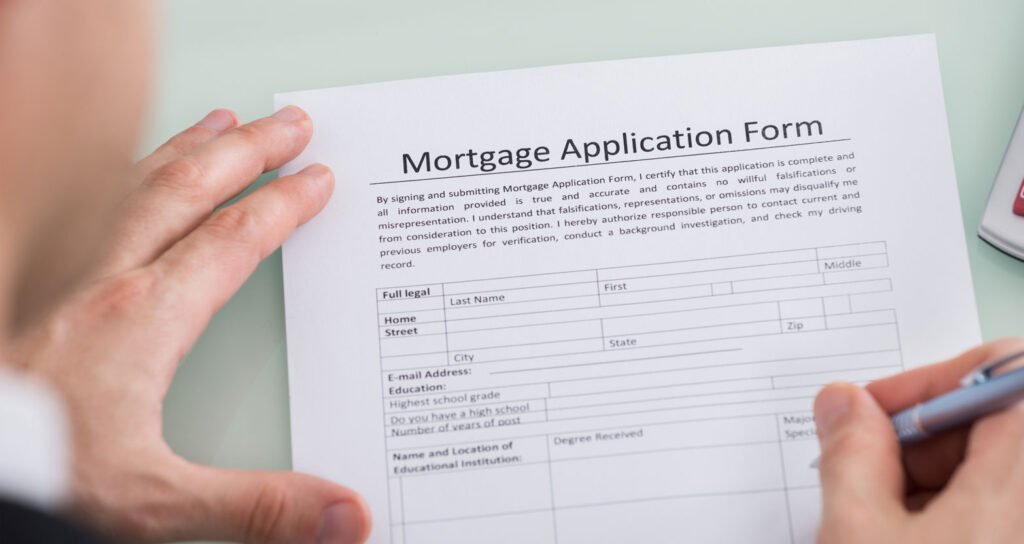
You’ll also want to shop around online and compare lender rates to find the lowest mortgage rate available to you.
A low rate means a low monthly mortgage payment. On a fixed-rate mortgage, your rate and payment amount will not change during your mortgage term, typically five years.
As you look at loan offers side by side, pay attention to “points.”
Mortgage points are upfront fees you can pay in exchange for a lower mortgage rate. Each point you buy generally costs 1% of your loan amount and reduces your interest rate one-quarter of 1% point (0.25).
Getting a mortgage pre-approval is smart, particularly if you’re a homebuyer who’s likely to want a fixed-rate mortgage, says Reza Sabour, a senior adviser and director with the Canadian Mortgage Brokers Association of B.C.
A pre-approval is a formal letter from a lender that lays out how much money you can borrow and at what interest rate.
“In a very competitive real estate market where you and potentially 10 other people are looking at putting an offer on the same property, that seller is more inclined to go with a buyer who can show proof that they’re pre-approved,” Sabour says.
And that’s especially true now during the latter stages of COVID-19, he adds.
“Realtors are sort of expecting that their clients will be pre-approved. In a pandemic situation, in a lot of cases, you have to make an appointment to view something,” he says. “They might not want to put the time into doing that if the client is not already pre-approved.”
Pre-approved? Great! What next? Don’t make any new, large financial commitments prior to buying a home or refinancing an existing mortgage.
It may seem obvious, says Sabour, but people often don’t follow this sound advice.

“Someone gets pre-approved for a mortgage and it’s good for four months. Within that four-month window, they lease that BMW at $1,200 a month and they don’t tell us,” he says.
Then, here’s what happens: “They make an offer on a home with subject to financing. We pull their credit bureau and we see this gigantic lease payment that essentially kiboshes all the work we’ve done.”
Sabour says he sees this scenario played out with at least two out of every five mortgage applications.
Closing costs are fees you’ll pay to finalize your loan. Lenders generally have flexibility in setting their own costs, so you may be able to negotiate some of the charges.
Typical closing costs include home inspection fees, various taxes, title insurance (to protect the lender against any ownership disputes that might crop up), legal costs and reimbursements of any utility charges that the seller has prepaid.
Closing costs generally come in at 2% – 5% of your loan amount. That means on a $500,000 home, the charges could add up to anywhere from $10,000 to $25,000. It can sometimes help to sell your current residence first!

You’ll need to budget and make sure you can come up with that kind of money, because the fees must be paid upfront — in cash — on closing day, when you sign all of the paperwork for your new mortgage!
And, when you’re buying a home, the closing ends when you proudly receive the keys to your new place. Shall we celebrate?
Related posts


